

A damaged tooth can affect both the appearance and function of your smile. When a tooth becomes significantly damaged, a dental crown may be needed to restore and protect it.
Emax crowns offer a balance between strength and natural appearance. These metal-free ceramic restorations cover the visible part of the tooth to restore its shape and closely reproduce the color and translucency of natural enamel.
What Are Emax Crowns?
Emax crowns are all-ceramic dental restorations used to cover and protect teeth that have lost a significant amount of their natural structure.
Unlike a veneer, which mainly covers the front surface, a crown surrounds the entire visible portion of the tooth above the gum line. This allows it to restore both appearance and function when a tooth requires more protection than a veneer can provide.
An Emax dental crown may be recommended for the following:
-
- A significantly chipped or fractured tooth
-
- A tooth weakened by a large filling
-
- A worn or misshapen tooth
-
- A tooth that has received root canal treatment
-
- Replacement of an old or unattractive crown
-
- An anterior tooth that requires full coverage
-
- Selected posterior teeth when the bite is suitable
Emax restorations can be manufactured using two main techniques:
-
- Pressing the ceramic in a specialized dental laboratory
-
- Digitally designing and milling the crown using CAD/CAM technology
The material is available in different shades and levels of translucency. This helps the dental team select the appropriate balance between masking the tooth underneath and creating a lifelike final appearance.
At Al Fawzy Dental, before recommending treatment, we assess the tooth, root, gums, bite, and amount of healthy structure that remains. This allows us to determine whether Emax is appropriate or whether another restoration would provide better protection.
Read about Emax Veneers: Materials, Benefits, and Procedure
What Material Is Emax Made Of?
Emax crown material is primarily lithium disilicate, which is a high-strength glass-ceramic developed for dental restorations.
Its structure gives the restoration a combination of durability and transmission.
Because light can pass through the ceramic in a way that resembles natural enamel, the crown can reproduce variations in shade and translucency.
Why Are Emax Crowns Popular?
These crowns have become a widely used option because they combine cosmetic quality with reliable performance in a lot of cases.
A Natural Appearance
One of the main advantages of Emax is its ability to closely imitate the optical qualities of natural teeth.
Its translucency helps us reproduce details such as the following:
-
- Natural shade transitions
-
- Enamel-like brightness
-
- Subtle surface texture
-
- Depth rather than a flat, opaque color
These qualities are especially valuable for front teeth, where even small differences between a crown and the neighboring natural teeth may be noticeable.
No Metal Along the Gum Line
Emax crowns contain no metal substructure.
Some traditional crowns may develop a dark line near the gum, especially if the gums recede. A metal-free crown avoids this metallic edge and can create a more natural transition between the restoration and gum tissue.
Customized Color and Shape
The crown is designed according to the tooth being treated and the surrounding smile.
We consider:
-
- The shade of neighboring teeth
-
- The color of the prepared tooth
-
- Tooth length and width
-
- Facial proportions
-
- Gum line
-
- Smile symmetry
-
- Bite relationship
-
- The patient’s aesthetic preferences
Our aim is not to create a bright tooth. It is to restore the tooth in a way that looks natural and balanced within your smile.
Strength for Everyday Function
Emax crown strength is sufficient for many anterior and selected posterior restorations when the material is used at the correct thickness and the patient’s bite is suitable.
When Is an Emax Crown Recommended?
An Emax crown may be considered when a tooth requires complete coverage but appearance remains an important part of the treatment plan.
Cracked or Chipped Teeth
A small chip may sometimes be treated with bonding or a veneer. However, a larger fracture can leave the tooth too weak for a surface-only restoration.
A crown surrounds the tooth and helps protect the remaining structure while restoring its original shape.
Teeth with Large Fillings
A tooth containing a large filling may have only a limited amount of natural structure remaining.
Replacing the filling alone may not provide enough support. In some cases, complete coverage can help distribute biting pressure more effectively and reduce the risk of further structural damage.
Teeth Treated with Root Canal Therapy
Some root canal-treated teeth become weaker because of previous decay, fractures, or the amount of structure removed during earlier treatment.
A crown can be recommended to restore and protect the remaining tooth. We select the final material according to the location of the tooth, remaining structure, bite, and cosmetic requirements.
Severe Discoloration
Some teeth remain dark or yellowish despite professional whitening. Discoloration may also result from old restorations, trauma, previous root canal treatment, or changes within the tooth.
An Emax crown can cover the entire visible tooth and give it back its brighter color.
Old or Unattractive Restorations
Older crowns and fillings may become uneven, discolored, damaged, or visually inconsistent with the surrounding teeth.
After evaluating the tooth underneath, we may remove the existing restoration and replace it with a customized ceramic crown.
Worn or Misshapen Teeth
A crown may restore height, proportions, and function to a tooth affected by significant wear.
However, worn teeth often require a broader evaluation because the cause may involve grinding, bite problems, or erosion. Restoring the appearance without addressing the cause could place the new crowns at risk.
Emax Crowns for Front Teeth
Emax crowns are selected for anterior teeth because the material can reproduce fine aesthetic details that are difficult to achieve with more opaque restorations.
A well-designed anterior crown provides the following:
-
- A shade close to the surrounding teeth
-
- Natural-looking translucency
-
- Better harmony between tooth shape and facial features
-
- Stable contact with the gums
-
- No visible metal margin
Front teeth still experience pressure during biting and jaw movement. For this reason, appearance should never be the only consideration. The dentist must also assess the bite and ensure that the crown is not exposed to damaging contact.
Can Emax Crowns Be Used on Back Teeth?
They can be used as posterior crowns; however, the back teeth normally experience greater chewing pressure than the front teeth. So the choice depends on:
-
- Which tooth is being restored
-
- The amount of natural structure remaining
-
- Crown thickness
-
- The patient’s bite
-
- Grinding or clenching
-
- The type of opposing teeth or restorations
-
- The dentist’s preparation and bonding plan
Emax Crown Disadvantages
Although Emax provides excellent aesthetic results, it is not the best choice for every patient or every tooth.
More Tooth Preparation Than a Veneer
Because the crown surrounds the tooth, more natural structure must usually be removed than with a veneer or partial restoration.
Risk of Fracture
Like any ceramic restoration, Emax can chip or fracture under excessive force.
The risk may increase with severe grinding, inadequate ceramic thickness, biting hard objects, or using the teeth to open packaging.
Not Always the Best Choice for Heavy Biting Forces
Zirconia may be more appropriate in some posterior cases or for patients with very strong bites.
As always, good hygiene and regular dental examinations remain the most essential parts of caring for your teeth and restorations, be it an Emax crown or anything else.
Crown Restoration Process at Al Fawzy Dental
1. Consultation and Examination
We begin by examining the tooth, gums, bite, existing fillings, and surrounding teeth.
X-rays may be required to assess the following:
-
- The tooth root
-
- Existing decay
-
- Bone support
-
- Previous root canal treatment
-
- Inflammation or infection
-
- The amount of healthy structure remaining
Any active oral-health problems must be treated before the final crown is placed.
2. Treatment Planning
First, we decide whether a crown is necessary, and if so, whether Emax is the most suitable material for your specific case.
If the tooth does not require complete coverage, a filling or a veneer may preserve more healthy structure. If the tooth is severely weakened or exposed to high pressure, another crown material may be safer.
3. Tooth Preparation
The tooth is carefully reduced to create enough space for the ceramic crown.
The preparation must allow the crown to have sufficient thickness without becoming bulky. At the same time, we preserve as much healthy structure as the case permits.
4. Digital Scan or Impression
A digital scan or traditional impression is taken to record the prepared tooth, neighboring teeth, gum line, and bite.
This information is then used to manufacture a crown that fits accurately and maintains appropriate contact with the surrounding teeth.
5. Temporary Crown
A temporary restoration may be placed while the final crown is being produced, as it can help protect the prepared tooth and maintain appearance and function.
6. Crown Trial and Placement
Before final placement, we assess:
-
- The fit of the crown
-
- Margin accuracy
-
- Shape and proportions
-
- Contact with neighboring teeth
-
- Shade and translucency
-
- Relationship with the gums
-
- Bite and jaw movements
-
- The patient’s approval of the appearance
Once the necessary checks and adjustments have been completed, the crown is bonded in place.
7. Follow-Up and Maintenance
At follow-up visits, we review the bite, gums, crown margins, and general comfort.
Regular examinations help identify changes early and support the long-term health of both the restoration and the tooth underneath.
Emax Crown Before and After: Patient Results
At Al Fawzy Dental, we plan treatment according to the original condition of each tooth rather than use the same approach for every smile.
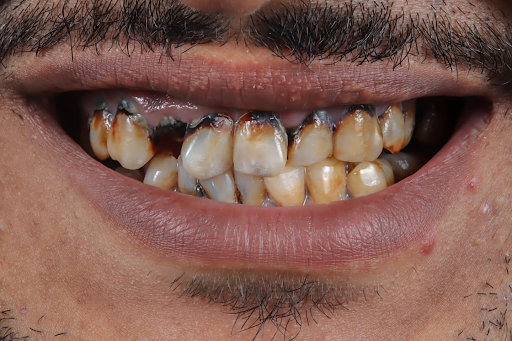
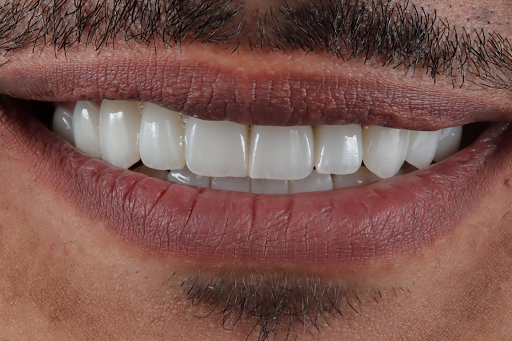
Procedure:
Full smile rehabilitation using Emax crowns.
Patient Concern:
The patient had severely damaged teeth, deep discoloration, and an uneven smile that affected both function and confidence.
Treatment and Outcome:
The damaged teeth were reconstructed with Emax crowns to restore strength, improve tooth shape and alignment, and create a brighter smile. The final result is a strong and natural-looking transformation.
Why Choose Al Fawzy Dental for Emax Crowns?
At Al Fawzy Dental, we do not select a crown based on appearance alone. We evaluate every possible variable before recommending the most suitable restoration.
Our crown treatments are supported by warranty coverage, providing additional reassurance and reflecting our confidence in the quality of our clinical work and materials.
With branches in Agouza and New Cairo, professional and specialized restorative and cosmetic dental care is closer than you think.
International patients also receive dental tourism support and treatment planning before traveling from abroad. We also offer online consultations for the convenience of our patients.
Book your Emax crowns consultation with Al Fawzy Dental today.
Frequently Asked Questions
Is an Emax Crown Better Than Zirconia?
Neither material is automatically better in every situation.
Emax can be preferred for visible front teeth because its glass-ceramic structure provides high translucency and natural-looking optical effects. Zirconia is generally stronger and may be preferred for teeth exposed to greater pressure, patients with heavy grinding, or restorations requiring additional structural strength.
I Heard Emax Crowns Are Breakable. Is This True?
Emax crowns are not unbreakable, but describing them simply as fragile can be misleading.
All dental ceramics can fracture when exposed to forces beyond what they were designed to tolerate. The risk is influenced by the position of the tooth, ceramic thickness, remaining tooth structure, crown design, bite, grinding habits, and the quality of placement.
Can an Emax Crown Stain?
The glazed ceramic surface is highly resistant to staining and generally maintains its shade better than composite resin.
However, plaque, gum inflammation, discoloration at the crown margin, or staining of the neighboring natural teeth can affect the overall appearance of the smile. Professional maintenance and good daily hygiene remain important.
Are Emax Crowns Reliable?
Yes, Emax crowns can be reliable long-term restorations when they are used in appropriate cases and placed correctly.
But the material alone cannot compensate for poor case selection or uncontrolled biting pressure.


