

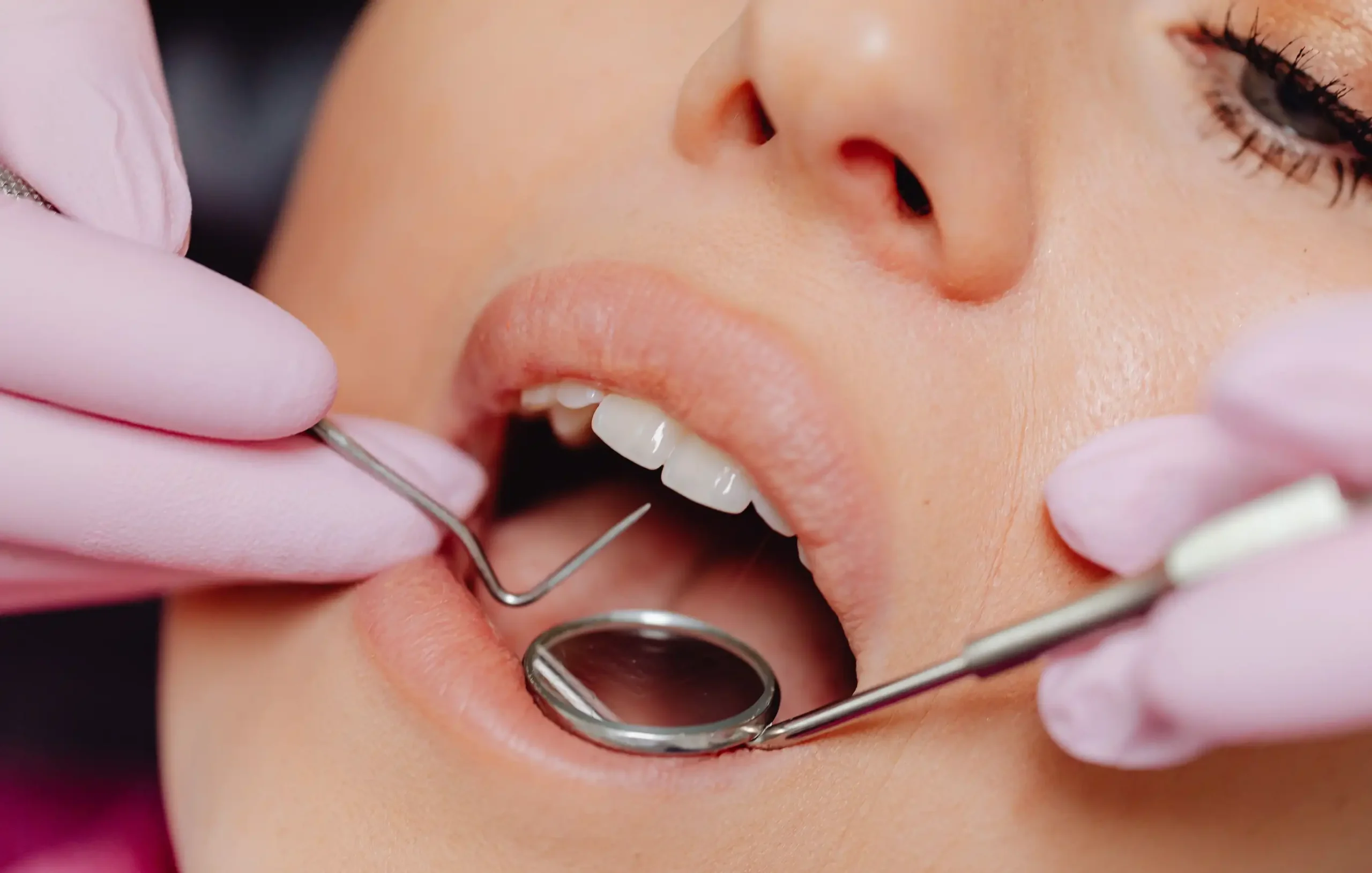
A rough or yellowish layer on your teeth can seem like a minor cosmetic issue, but it could actually be a sign that professional cleaning is needed.
It starts as a sticky film called dental plaque, which forms on the teeth when bacteria interact with food particles. If this dental plaque is not removed regularly, minerals in saliva can harden it, turning this film into what is called dental tartar, which cannot be removed by regular brushing.
Dental tartar removal does not only improve the appearance of your smile, but also helps protect the gums and teeth and supports better oral health.
In this article, we explain the difference between dental plaque and tartar, how each is removed, the benefits of professional cleaning, and how to prevent tartar from forming again.
What Is Dental Tartar and How Does It Form?
Dental tartar is simply hardened dental plaque. Tartar may form above or below the gumline and can contribute to gum irritation and inflammation, among other oral health problems.
Dental tartar is not just a cosmetic concern; removing it can help prevent future oral health complications such as gum recession and decay.
How Does Dental Tartar Removal Work?
Dental tartar removal depends on whether the buildup is still soft dental plaque or has already hardened into tartar.
Before Plaque Hardens
Dental plaque is relatively soft and can usually be removed with proper daily oral hygiene.
Effective plaque removal includes brushing twice a day, cleaning between the teeth with floss or suitable interdental tools, and paying close attention to the gumline.
These habits help prevent plaque from staying on the teeth long enough to become dental tartar.
After Plaque Turns Into Dental Tartar
Once plaque hardens, professional dental tartar removal by a dentist is required.
A dentist uses specialized instruments to remove hardened deposits from the tooth surfaces.
If dental tartar has accumulated below the gumline or there are signs of periodontal disease, deeper cleaning might be necessary. This procedure is known as scaling and root planing and focuses on cleaning below the gumline and around the tooth roots.
At Al Fawzy Dental, your treatment journey is planned according to your individual needs, with personalized care, clear treatment steps, and transparent pricing. Start yours today.
Benefits of Removing Dental Tartar
Professional cleaning provides several oral health benefits beyond simply removing visible deposits.
- Supports healthier gums: Dental tartar and plaque can irritate the gums and contribute to redness, swelling, and bleeding.
- Helps reduce the risk of gum disease: Ongoing buildup can allow gum inflammation to progress into more advanced periodontal problems.
- Improves breath: Bacteria, food debris, dental plaque, and tartar can contribute to unpleasant breath.
- Makes daily cleaning easier: Removing hardened deposits allows brushing and interdental cleaning to reach the tooth surfaces more effectively.
- Reduces complications related to buildup: Long-term accumulation may contribute to gum recession, decay, and periodontal problems.
Common Questions About Dental Tartar Removal
How Many Sessions Are Needed?
Routine cleaning might only require one appointment.
However, heavier dental tartar buildup or deposits below the gumline may require more than one session. At Al Fawzy Dental, our dentists will determine the number of sessions needed based on the condition of your teeth and gums.
Does Tartar Removal Weaken Teeth?
No. Professional dental tartar removal does not weaken healthy teeth or remove tooth enamel.
Some people may experience temporary sensitivity or mild gum bleeding after treatment, especially when there has been significant buildup or gum inflammation.
Is Dental Tartar Removal Painful?
Routine cleaning is generally not painful, although you may feel mild pressure or sensitivity.
For deeper cleaning below the gumline, local anesthesia may be used to reduce discomfort.
What Happens After Tartar Removal?
The teeth usually feel cleaner and smoother after treatment.
Breath and the overall appearance of the teeth may also improve. Temporary sensitivity can occur, particularly if there was heavy tartar buildup or gum recession.
Can You Remove Dental Tartar at Home?
Once tartar has hardened, it cannot be removed safely with brushing or flossing alone.
People sometimes search online for how to remove tartar from teeth without a dentist, but using sharp tools or attempting to scrape tartar at home can damage the enamel or injure the gums. Professional tartar removal is always the recommended approach.
How to Prevent Dental Tartar Buildup
The best way to reduce tartar formation is to control dental plaque before it has time to harden.
To help prevent buildup:
- Brush twice daily with fluoride toothpaste and a soft-bristled toothbrush.
- Clean between the teeth every day with floss or interdental tools.
- Brush carefully along the gumline.
- Limit excessive sugary foods and drinks.
- Avoid smoking and tobacco products.
- Attend regular dental check-ups and professional cleanings.
- Never use sharp objects to scrape tartar from your teeth.
At Al Fawzy Dental, your comfort throughout every stage of treatment is always our top priority, so don’t put off the dental care you’ve been waiting for.
Book your appointment with Al Fawzy Dental today and enjoy comprehensive dental care, from your first consultation through to the completion of your treatment.


